
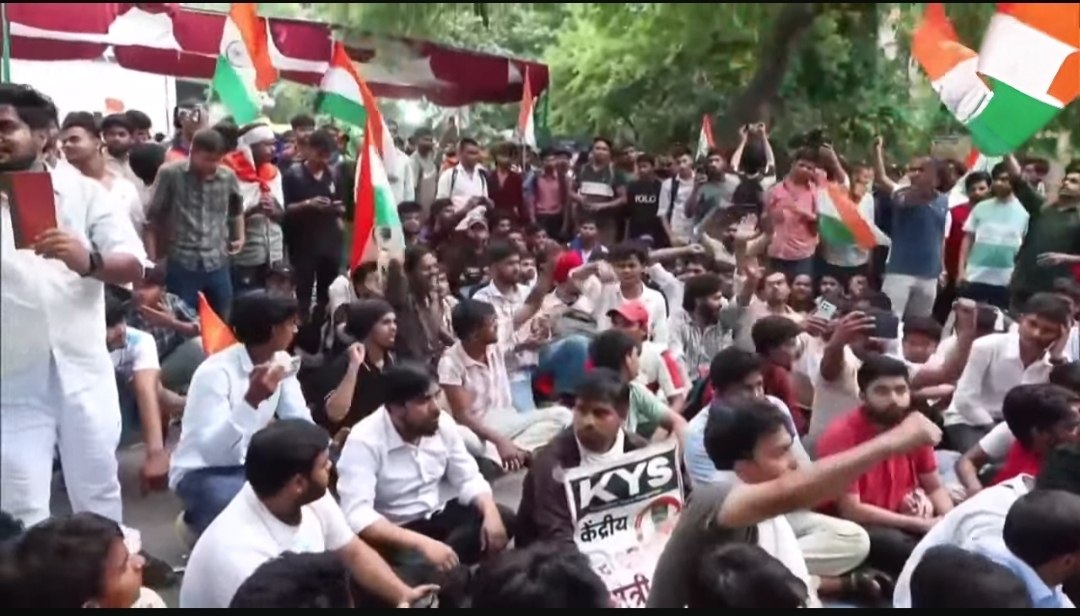
Thousands of students from across India gathered at New Delhi’s Jantar Mantar to protest against alleged irregularities in competitive examinations, particularly the NEET UG 2026 paper leak controversy. The demonstration, which attracted students, activists, and supporters from several states, called for greater transparency in the examination system, stricter action against those responsible for paper leaks, and comprehensive reforms in the country’s education system. The protest has emerged as one of the largest student-led movements of the year. (Reuters)
Students Raise Concerns Over Examination Integrity
The protest was fueled by widespread frustration among students who believe repeated examination irregularities have undermined trust in India’s competitive testing system. Participants carried placards with slogans demanding justice for affected candidates and accountability from authorities responsible for conducting national-level examinations.
Many students argued that years of preparation are being put at risk because of recurring paper leak incidents and alleged administrative failures. They emphasized that fair and transparent examinations are essential for protecting the future of millions of aspirants. (Reuters)
Jantar Mantar Becomes the Centre of Student Demonstrations
Jantar Mantar, a traditional venue for peaceful public demonstrations in New Delhi, witnessed thousands of protesters gathering to voice their concerns. Students from different educational backgrounds joined together, stating that the issue extends beyond a single examination and reflects the need for broader reforms in India’s recruitment and examination processes.
Several participants described the movement as a fight for merit, fairness, and equal opportunity for every student regardless of their background. (AP News)
Demand for Stronger Examination Reforms
Among the major demands raised during the protest were:
- Strict punishment for individuals involved in examination paper leaks.
- Greater transparency in conducting national entrance examinations.
- Improved security measures during question paper preparation and distribution.
- Faster investigation into examination-related irregularities.
- Better grievance redressal mechanisms for students.
Protesters said these reforms are necessary to restore confidence in India’s examination system and prevent similar controversies in the future. (The New Indian Express)
Political Leaders Extend Support
The protest also drew attention from several political leaders. Samajwadi Party MP Dimple Yadav joined demonstrators during the “Sansad Chalo” campaign and questioned the fairness of the examination system, with slogans such as “NEET hai ya Cheat hai?” becoming prominent during the march. The participation of political representatives increased national attention on the students’ demands. (The Times of India)
Police Presence and Security Measures
Delhi Police deployed heavy security around Jantar Mantar and nearby Parliament routes as large crowds gathered. Barricades were installed to regulate movement after permission for a march toward Parliament was denied.
During attempts by some protesters to move beyond restricted areas, confrontations occurred between demonstrators and police personnel. Authorities stated that security measures were necessary to maintain public order, while several protesters alleged that excessive force was used to disperse the crowd. (Reuters)
Sonam Wangchuk’s Support Adds Momentum
Social activist Sonam Wangchuk expressed support for the movement demanding education reforms. His involvement attracted significant public attention and encouraged more students and civil society groups to participate in the campaign.
Many demonstrators stated that the movement is not limited to one examination but represents broader concerns about transparency, accountability, and fairness in India’s education system. (Reuters)
Growing Nationwide Support
The demonstrations inspired solidarity protests in several cities, with students organizing peaceful gatherings to support the demands raised at Jantar Mantar. Participants said the movement reflects growing frustration among young people who spend years preparing for highly competitive examinations.
Many protesters stressed that protecting the credibility of entrance examinations is essential for ensuring equal opportunities for deserving candidates across the country. (Navbharat Times)
Government and Authorities Respond
Government representatives indicated that discussions with protest organizers were underway. Officials reiterated that examination reforms and security measures are being reviewed while urging students to maintain peace and use lawful channels to express their concerns.
Student leaders, meanwhile, said they would continue advocating for reforms until meaningful action is taken to improve transparency and restore confidence in the examination process. (The Economic Times)
Conclusion
The Jantar Mantar protest has become a significant moment in India’s ongoing debate over examination reforms. Thousands of students united to demand accountability, stronger safeguards against paper leaks, and a fairer examination system. The movement has highlighted the importance of maintaining public trust in competitive examinations that shape the careers of millions of young people.
As discussions continue between authorities and protest representatives, students across the country will be closely watching for concrete reforms aimed at ensuring transparency, fairness, and integrity in future examinations. (Reuters)