
:
India once again woke up to another heartbreaking tragedy — one that could have been prevented.
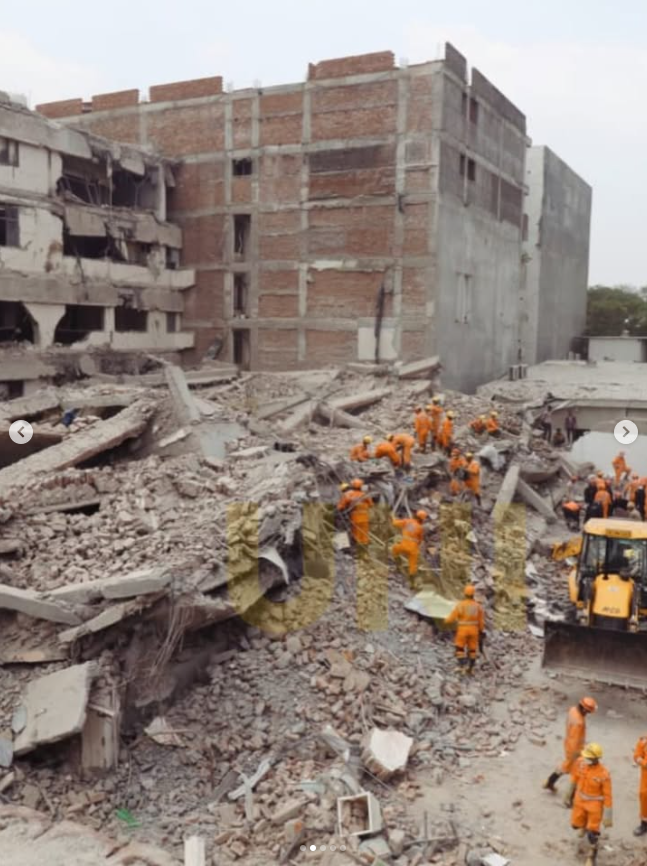
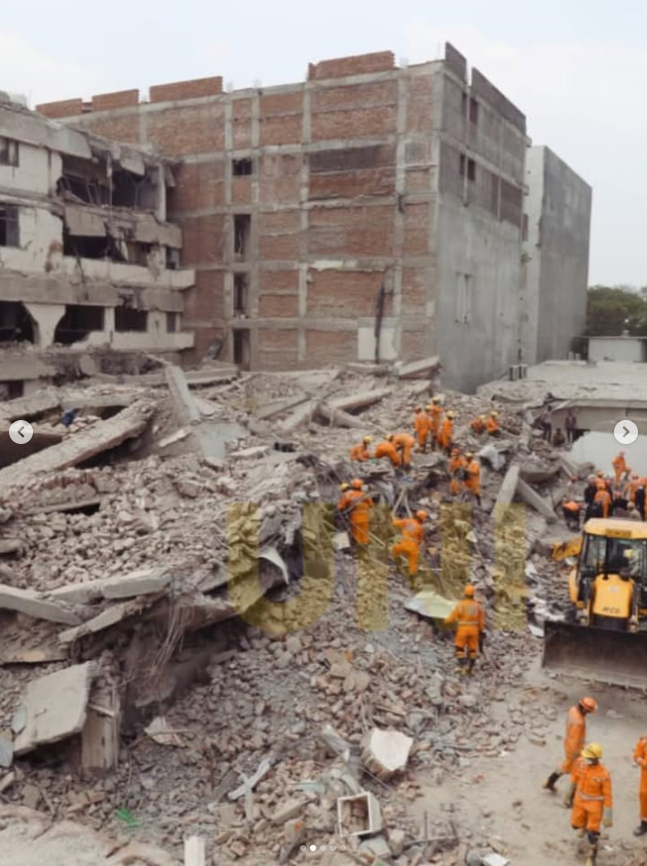
Yesterday evening around 7:30 PM near Lane No. 5, Saket, New Delhi, a building collapse claimed multiple innocent lives and left several others injured. What makes this incident even more painful is the fact that the building had reportedly received a demolition notice nearly three years ago. Despite being declared structurally unsafe, construction allegedly continued, floors were added, and people continued living inside the dangerous structure.
Now, questions are being raised across the country:
Who allowed this to happen?
Who approved construction on a compromised building?
Why were safety warnings ignored?
And most importantly — why are innocent people always the ones forced to suffer because of corruption and negligence?
Dreams Buried Under Concrete
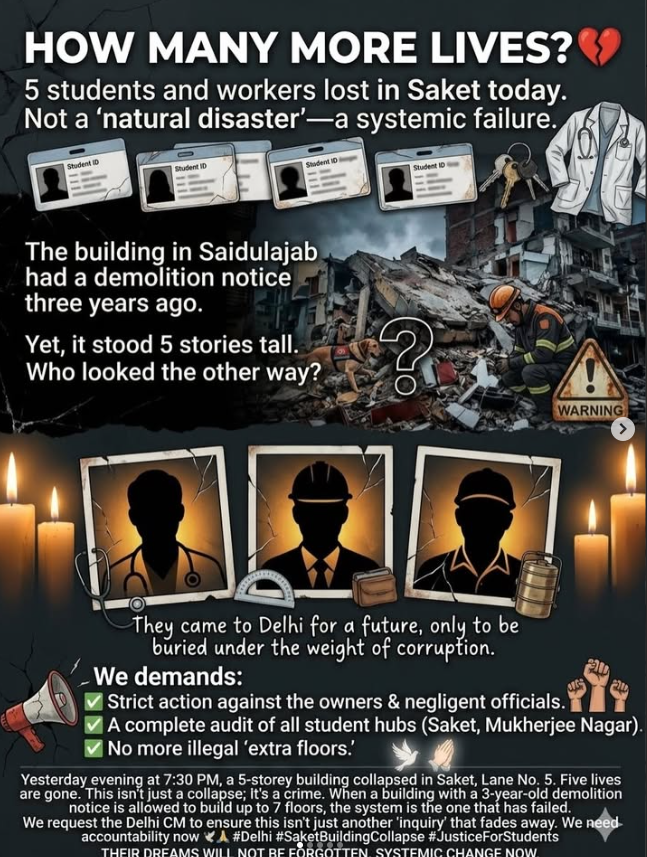
The victims were not criminals, politicians, or powerful businessmen. They were ordinary citizens trying to build better futures.
Among the deceased and injured were:
- FMGE aspirants preparing to become doctors
- Young engineering students
- Working professionals
- A woman who reportedly ran a mess service for students and locals
These were people chasing dreams. Students studying late nights, families trying to survive in expensive cities, and hardworking individuals hoping for a better life.
Instead of safety and shelter, they received tragedy.
For many across India, this incident is not just a building collapse — it is the collapse of trust in a system that repeatedly fails ordinary citizens.
A Tragedy That Raises Serious Questions
One of the most disturbing aspects of the Saket collapse is the allegation that authorities already knew the building was unsafe.
Reports circulating online suggest that:
- A demolition notice had been issued years ago
- Structural concerns were identified earlier
- Construction allegedly continued despite warnings
- Additional floors were reportedly added later
If these claims are true, then this was not an “accident.”
It becomes a case of negligence, corruption, and administrative failure.
People are asking:
- Who approved the construction?
- Were safety inspections ignored?
- Did bribery allow illegal expansion?
- Why was no strict action taken earlier?
These questions are important because tragedies like this are becoming disturbingly common in India.
Corruption Turning Buildings Into Graveyards
Across multiple Indian cities, illegal constructions continue to rise despite clear safety violations.
Many unsafe buildings survive because:
- Rules are ignored
- Inspections are manipulated
- Bribes silence action
- Complaints are delayed
- Accountability disappears
As a result, ordinary citizens unknowingly live inside dangerous structures.
The Saket tragedy reflects a larger national problem where profit often becomes more important than human life.
For students and middle-class families, affordable accommodation is already difficult to find in major cities. Many are forced to live in overcrowded or poorly maintained buildings because safer options are financially out of reach.
When authorities fail to enforce safety laws, vulnerable people become trapped between economic pressure and physical danger.
FMGE Students Among the Victims
The incident has deeply affected the FMGE student community.
Foreign Medical Graduate Examination (FMGE) aspirants already face enormous academic pressure. Many spend years preparing for licensing exams after returning from medical universities abroad.
Students often live together in rented accommodations near coaching centres to reduce expenses while preparing for exams.
The loss of young FMGE aspirants in this tragedy has triggered emotional reactions online, with many students expressing anger, fear, and frustration over unsafe living conditions in metropolitan cities.
For medical students preparing to save lives in the future, losing their own lives due to negligence feels especially heartbreaking.
The Silent Struggle of the Middle Class
The tragedy also highlights the struggles of India’s middle class and students living away from home.
Every year:
- Students migrate to cities for education
- Families sacrifice savings for coaching and rent
- Young professionals settle in affordable but unsafe areas
Most tenants rarely know whether a building is legally approved or structurally safe. They trust authorities to ensure basic safety standards.
But incidents like Saket show how dangerous that trust can become when corruption weakens enforcement systems.
For many families, one phone call changed everything forever.
Public Anger Growing Online
Social media platforms have been flooded with anger after the incident.
Many users questioned:
- Why unsafe buildings remain occupied
- Why illegal construction continues openly
- Why action only happens after deaths occur
- Why accountability is often temporary
Citizens are increasingly frustrated with the pattern seen after such tragedies:
- A disaster occurs
- Political statements are released
- Investigations are announced
- Media attention fades
- Long-term reforms never fully happen
People are now demanding stronger action instead of symbolic responses.
Calls for Strict Accountability
Several citizens, activists, and student groups are urging authorities to take strict legal action against everyone responsible.
Demands include:
- Criminal investigation against builders
- Action against negligent officials
- Independent structural safety audits
- Stronger anti-corruption monitoring
- Compensation for victims’ families
- Safer student housing regulations
There is also growing pressure on local authorities to identify other unsafe structures before another tragedy occurs.
Can India Prevent Such Disasters?
Experts believe tragedies like this are preventable if:
- Building laws are enforced strictly
- Corruption is punished seriously
- Safety inspections remain transparent
- Illegal construction is stopped early
- Citizens can report violations safely
Urban safety cannot depend only on luck.
India’s rapidly growing cities require stronger infrastructure monitoring, especially in densely populated student and residential areas.
Without reform, similar tragedies may continue repeating across the country.
More Than Just Headlines
The Saket collapse should not become just another trending topic forgotten after a few days.
Behind every victim was:
- A family waiting for a phone call
- A student chasing a career
- A parent sacrificing everything
- A young life filled with plans and ambitions
These were not just statistics.
They were future doctors, engineers, workers, and dreamers whose lives ended because systems designed to protect citizens failed them.
Conclusion
The Saket building collapse is not only a structural disaster — it is a painful reminder of how corruption, negligence, and weak accountability continue to endanger ordinary people in India.
As investigations continue, citizens across the country are demanding more than sympathy. They want accountability, transparency, and meaningful reform.
Because no student preparing for exams, no family working hard to survive, and no ordinary citizen should ever fear losing their life simply because someone ignored safety for profit.
The country now waits to see whether this tragedy finally becomes a turning point — or just another forgotten disaster buried under silence.